Tactics
Chess Tactics for Beginners: The Patterns That Win Games
Learn the basic chess tactics every beginner needs—forks, pins, skewers, and more—with clear examples you can use in your next game.
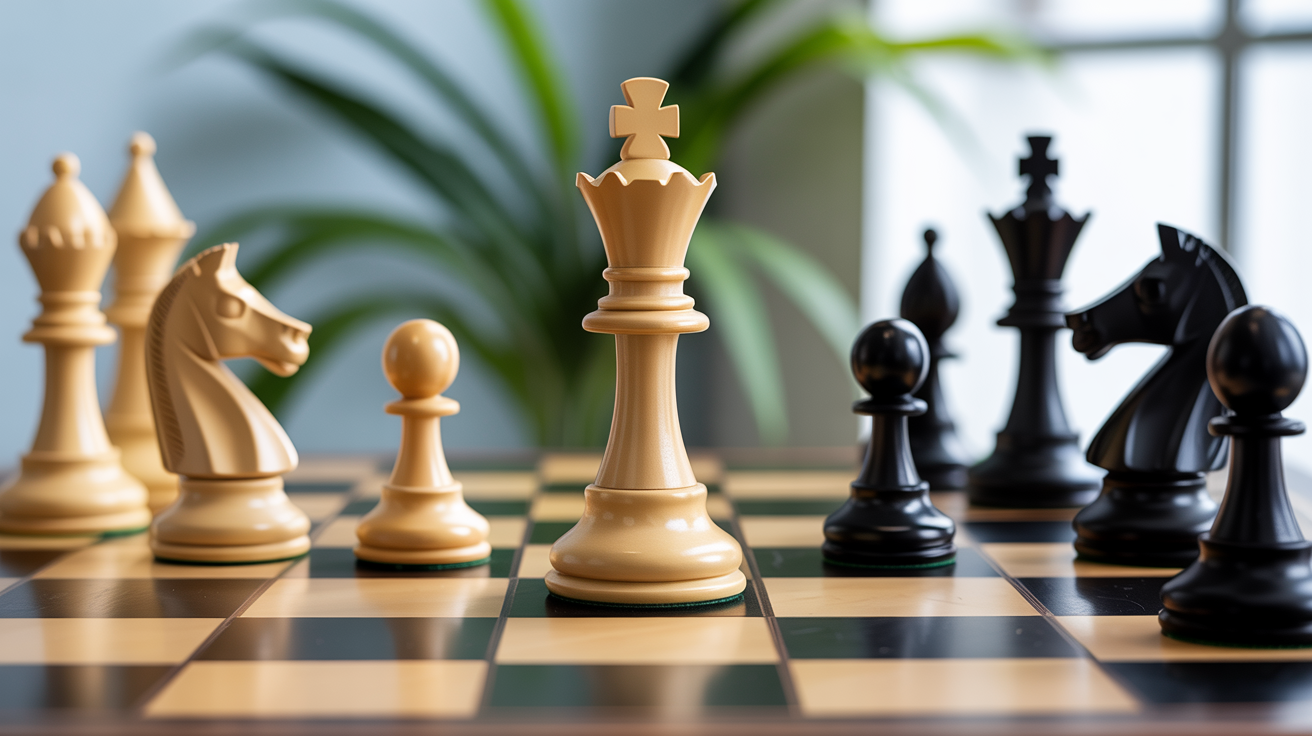
Most games between beginners aren't decided by grand strategy. They're decided by one player spotting a short combination that wins a piece, and the other player missing it. Those combinations almost always follow one of a handful of repeating patterns. Learn to recognize those patterns and your results will improve faster than almost any other kind of study.
The short version:
- A tactic is a forced sequence, usually two to five moves, that wins material, forces checkmate, or secures a clear positional edge.
- Six patterns cover almost everything a beginner will run into: fork, pin, skewer, discovery, double check, and overloading.
- Knights are the classic forking piece; pins and skewers usually come from bishops, rooks, and queens along open lines.
- Puzzle solving beats casual play for building this skill, since puzzles show you dozens of pattern instances per hour instead of one or two per game.
What Is a Chess Tactic?
A tactic is a short sequence of moves, usually two to five, that gains something concrete: material (capturing a piece worth more than what you give up), checkmate, or a decisive positional advantage. Tactics work because they involve a threat the opponent cannot answer adequately.
The key word is "forced." A good tactic leaves your opponent with no good reply. That's what separates a tactic from a general plan. If your opponent can simply ignore your idea, it isn't a tactic; it's a wish.
Before looking at specific patterns, fix two habits in your mind:
- Always ask "why?" before capturing or moving. Does this move hang a piece?
- Look for checks, captures, and threats on every turn. These are the moves most likely to create or defuse a tactic.
The Fork: One Piece, Two Targets
A fork happens when one piece attacks two or more of the opponent's pieces at the same time. The opponent can only move one piece, so you capture the other for free.
Knights are the best forking pieces because they jump over the board in an L-shape and cannot be blocked. A classic knight fork:
Imagine White has a knight on e5, and Black has a king on g8 and a rook on c7. White plays Ne5-d7 (or wherever the geometry puts two valuable targets on squares a knight can hit simultaneously). Black can only move one, and White collects the other.
The fork does not have to involve the king. Any time a single piece attacks two undefended targets, the defender loses one of them. Queens, rooks, bishops, and even pawns can fork, but the knight fork is the most common pattern you'll see in beginner and intermediate games.
Watch for fork setups: a fork usually requires the enemy pieces to stand on specific squares. Sometimes you have to maneuver or sacrifice to get them there. Ask yourself: "If I could place my knight anywhere, where would it attack two things at once?" Then figure out how to reach that square.
Read more about the specifics in our guide on the fork in chess.
The Pin: Freezing a Piece in Place
A pin ties a piece down because moving it would expose something more valuable behind it. There are two kinds:
Absolute pin: The pinned piece cannot legally move because it would expose the king to check. A bishop on b5 pinning a knight on c6 to the king on e8 (after 1.e4 e5 2.Nf3 Nc6 3.Bb5) is an absolute pin. Moving the knight would put the king in check, which is illegal.
Relative pin: The pinned piece can technically move, but doing so would lose the piece behind it. For example, a rook on e1 pinning a knight on e5 to a queen on e8. Moving the knight is legal but loses the queen.
Pins are useful in several ways:
- The pinned piece cannot participate in the game freely.
- You can pile pressure onto it by attacking it with more pieces than the opponent defends it with.
- You can sometimes win the pinned piece outright by attacking it enough times.
A common beginner mistake is forgetting that the piece doing the pinning is itself a target. If your bishop is pinning the opponent's knight, the opponent will often play ...a6 to threaten your bishop. Plan for that.
Our full article on pins in chess walks through both types with positions you can try on your own board.
The Skewer: Hitting the More Valuable Piece First
A skewer is essentially a pin in reverse. Instead of the weaker piece being in front, the more valuable piece (often the king) is in front, and a less valuable piece hides behind it.
When you attack the valuable piece, it has to move, and then you capture what was behind it.
Example: White has a rook on a1, Black has a king on e5 and a queen on e8. White plays Ra1-e1+. The king must move to escape check, and then White captures the queen on e8 with Re1xe8.
Skewers most often involve the king, but they can involve any two pieces where the one in front is more valuable. A rook on d1 attacking a queen on d5 with a bishop on d8 behind it is a skewer too, the queen moves, and the bishop falls.
If you want to learn how skewers differ from pins in detail, see skewers in chess explained.
The Discovery: Unleashing a Hidden Attack
A discovered attack happens when you move one piece out of the way and reveal an attack by a piece behind it. Moving the front piece gives you two threats at once: whatever the moving piece does, plus the discovered attack from the piece that was hiding.
If the discovered attack is also a check, it's called a discovered check, and it's particularly powerful because the opponent must get out of check before dealing with anything else.
Example: White has a bishop on c4 and a rook on e1. A pawn is sitting on e5 in the way. White pushes the pawn to e6 (forking f7 and d7 with the pawn itself) AND reveals an attack from Re1 down the e-file. Black has to deal with two problems at once.
The pattern to look for: whenever you have a piece that's blocking the line of another piece (a rook, bishop, or queen), ask what happens if the front piece moves. Sometimes the answer is "nothing interesting." But sometimes moving the front piece while also attacking something makes a tactic that wins material.
Double Check: The Most Forcing Move in Chess
A double check is a special case of the discovered attack where both the moving piece AND the piece it reveals both give check at the same time. The king cannot simply capture one attacker or interpose a piece, because it would still be in check from the other. The only legal response to a double check is to move the king.
This makes double checks extremely powerful for delivering checkmate. The pattern appears most often when a bishop or queen moves out of a blocking piece's shadow, and both end up attacking the king.
Double checks are relatively rare at the beginner level, but recognizing the pattern means you might create one rather than blunder into it from the other side.
A Quick Reference: Common Tactics at a Glance
| Tactic | What Happens | Key Piece(s) |
|---|---|---|
| Fork | One piece attacks two or more at once | Knight most common; all pieces can |
| Pin | A piece is stuck because something valuable is behind it | Bishop, rook, queen |
| Skewer | Valuable piece is in front; capture what's behind after it moves | Bishop, rook, queen |
| Discovery | Moving one piece reveals an attack from another | Any piece in front of a slider |
| Double check | Moving a piece reveals check AND that piece also checks | Typically bishop + rook |
| Overloading | A defender is asked to protect two things and can only do one | Depends on position |
Overloading deserves a brief mention. It happens when a single piece is defending two different threats. If you can attack both targets at once, the defender has to choose which to save, and you take the other. For example, a rook on e8 defending both e1 and the pawn on e5. Attack both of those squares and the rook cannot cover them both.
How to Start Practicing These Patterns
Reading about tactics is fine, but the patterns only become useful when you can spot them quickly in real games. Here's a practical approach:
Solve puzzles every day. Even ten puzzles a day done with full concentration beats fifty puzzles done casually. Free puzzle trainers at Chess.com and Lichess.org give you an endless supply, sorted by theme. Start with "fork" and "pin" themes before moving to the harder ones.
After your own games, look at the moves you missed. Most online playing sites have a "game review" or "analysis" feature. When the computer flags a missed tactic, replay it until you understand why it works. That moment of "oh, I see it now" is where real learning happens.
Learn the pattern vocabulary. When you solve a pin puzzle, label it as a pin out loud. Naming the pattern connects it to the mental template you're building, so the next time a similar position appears, your brain retrieves the category faster.
A good progression: start with forks and pins since they show up most often. Then add skewers and discoveries. Overloading and double checks can come a bit later once the basics are solid.
FAQ
How many chess tactics do I really need to know as a beginner?
The six patterns above cover the vast majority of tactical opportunities you'll see in beginner games. You don't need an encyclopedic knowledge of every tactical motif, just forks, pins, skewers, discoveries, double checks, and overloading. Getting genuinely good at spotting those six will take you far.
Can I get better at tactics without solving puzzles?
Playing games alone won't make you much better at tactics. The patterns appear too infrequently in casual play to build the pattern recognition you need. Puzzle solving is the direct path: you see dozens of pattern instances per hour instead of maybe two or three per game.
What should I do when I can't find a tactic in a puzzle?
First, look for checks, every check your pieces can give. Then look for captures. Then look for the opponent's most valuable undefended or under-defended pieces. If you still don't see it, ask what the opponent's pieces are doing and whether any of them are "busy" defending two things at once. Going through this checklist systematically will break the logjam most of the time.
Is a 3-move combination a tactic?
Yes. Most tactics are two to five moves long. The pattern might be set up on move one, executed on move two, and collected on move three. Longer combinations exist, but they are built from the same short patterns, you'll find a fork, a pin, or a discovery somewhere in the chain.
How do I avoid blundering into tactics myself?
Before every move, ask whether your move leaves any of your pieces undefended or hanging. Then check whether your move opens a line to your own king or removes a defender from a key square. This "blunder check" takes less than ten seconds but catches the obvious mistakes that cost beginners the most games.
Further Reading
- Fork (chess), Wikipedia covers the tactic's history and shows examples across knight, bishop, and pawn forks.
- Pin (chess), Wikipedia breaks down absolute versus relative pins with annotated diagrams.
- Lichess Practice offers free, theme-sorted tactics training, including dedicated sections for forks, pins, and discovered attacks.