Endgames
Why an Extra Pawn So Often Wins: Endgame Conversion
Converting a material advantage in chess means playing accurately and patiently. Here's how to turn an extra pawn into a full point.
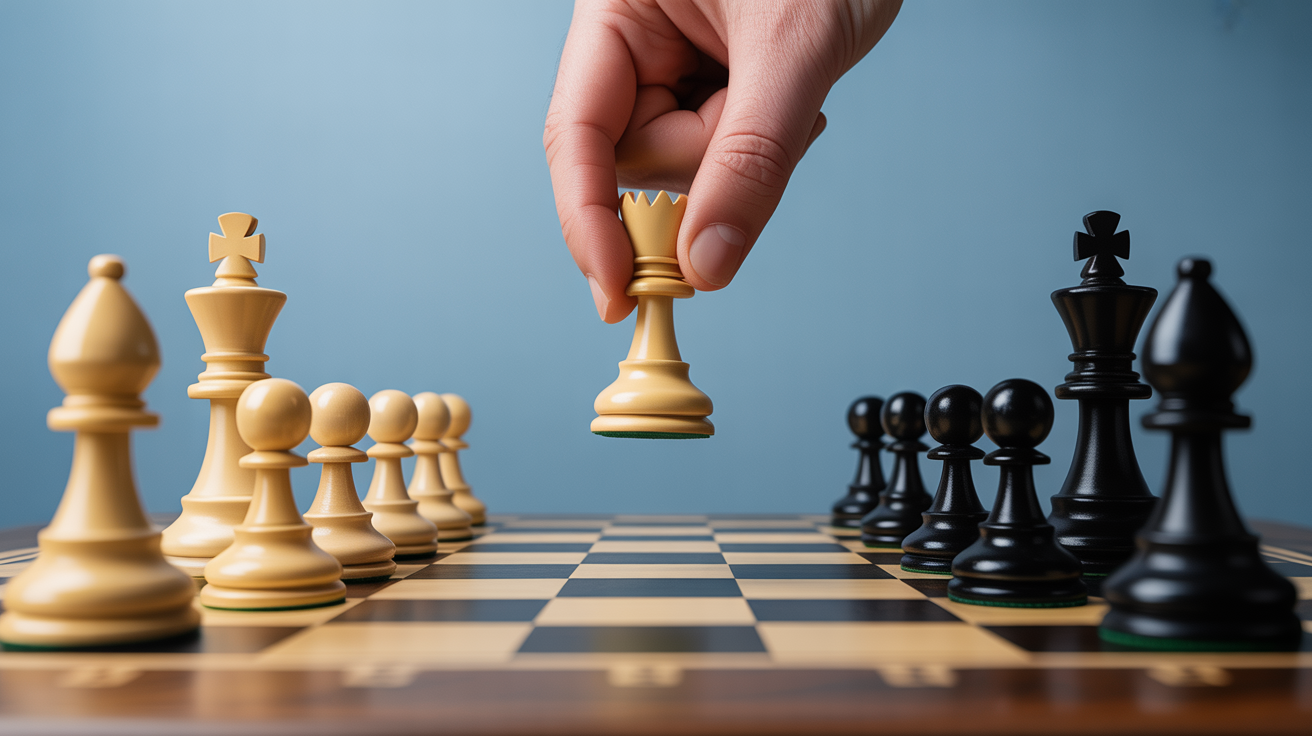
You've won a pawn. The position is simplified. Your opponent is waiting for you to slip. This moment, converting a material advantage from a theoretical win into an actual win, is where many beginners give back everything they earned. The good news is that the process is learnable. You don't need to memorize hundreds of lines. You need a handful of principles and the patience to apply them.
Why a Single Extra Pawn Matters
A pawn is worth roughly one point on the material scale, which sounds modest. In the endgame, though, a pawn can decide the game for two connected reasons.
First, pawn promotion is a constant threat. Every pawn has a path to the back rank, and a new queen almost always ends the game immediately. Your opponent has to spend energy stopping that threat, which limits what they can do offensively.
Second, pawn structure determines king activity. In the endgame, kings become fighting pieces. If your extra pawn creates a passed pawn or a favorable king route, your king can invade, pick off more pawns, and create a second promotion threat that your opponent simply cannot handle.
These two ideas sit underneath every extra pawn endgame. Keep them in mind as you play.
The First Step: Activate Your King
This is the most common mistake at the beginner level. A player wins a pawn, then shuffles pieces around waiting for something to happen. Nothing happens.
Your king is your strongest endgame piece. Centralizing it is not optional.
Good king paths in endgames:

Toward the center: e4, d4, d5, e5
Toward your passed pawn: escort it from behind
Toward opponent's pawns: invade on the side your extra pawn is on
The practical rule: when you have an extra pawn and the position is simplified, stop playing automatic moves. Find the best square for your king and route it there, even if it takes several moves.
Passed Pawns: Create One and Push It
A passed pawn is a pawn with no opposing pawn in front of it on its file or on adjacent files. Passed pawns are so strong because your opponent must use a piece, often their king or a rook, just to stop the promotion threat. That piece is stuck.
Creating a passed pawn from an extra pawn advantage follows a simple recipe in most positions:
- Trade pawns on the side where you are equal or behind.
- Use your extra pawn on the other side as a breakthrough or runner.
The classic example is a queenside pawn majority. If you have three pawns versus two on the queenside, advance them together, force a trade, and create a passed pawn that your opponent cannot match.
Once you have a passed pawn, push it. Don't advance it recklessly, but don't leave it sitting idle. A passed pawn on the sixth rank is a massive threat. A passed pawn on the third rank is just potential.
Rook Endgames: The Most Important Case
Rook endgames are the most common type of endgame, and they are notoriously difficult to convert even when you have an extra pawn. The defender has a specific drawing technique called the Lucena and Philidor positions that every serious student should study. But for beginners, three principles cover most of the practical ground.
Put your rook behind your passed pawn. A rook behind a passed pawn gains strength as the pawn advances. A rook in front of it is passive and cramped.
Keep your king active. Even in rook endgames, a centralized king usually outperforms a passive one. Don't hide your king when you are winning.
Cut off the defending king. Your rook can cut the opposing king off along a rank or file, preventing it from reaching your pawn. A king cut off on the third rank or further back often cannot stop a sixth or seventh rank pawn.
The chess endgames for beginners guide covers these ideas in more detail if you want a broader introduction to the endgame phase.
King and Pawn Endgames: The Rule of the Square
When there are no major pieces left, king and pawn endgames often come down to a single question: can the defending king catch your passed pawn?
There's a fast visual tool for this called the rule of the square.
Draw a square from the pawn to the promotion square.
Example: pawn on d5, promoting on d8.

The square: d5 e5 f5 f8 e8 d8 (roughly)

If the defending king can step inside this square on its move,
it catches the pawn. If not, the pawn promotes.
Beyond the rule of the square, king and pawn endgames hinge on opposition (the kings facing each other with one square between them) and a concept called the key squares. For a pawn on the d or e file, reaching the sixth rank with your king two squares ahead of your pawn usually guarantees promotion, regardless of where the defending king stands.
The articles on checkmating with king and queen vs king and the ladder mate with two rooks will matter once your pawn promotes, so they're worth reading alongside this guide.
Common Mistakes That Throw Away Won Positions
Here is a short list of the most reliable ways to draw a won extra pawn endgame. Avoid these.
| Mistake | Why It Costs You |
|---|---|
| Trading into a drawn pawn ending | Sometimes fewer pieces means a draw, not a win |
| Advancing your pawn too early alone | Without king support, the pawn can be blockaded |
| Ignoring your opponent's counterplay | One active rook can create perpetual threats |
| Giving up the passed pawn for nothing | Only trade it if you gain a decisive material or positional edge |
| Premature queen trades | Your queen plus pawn is often winning; bare kings may draw |
The most common of these is the stalemate trap in king and pawn endgames. When you are playing king and queen against a lone king, it is easy to place the defending king in stalemate if you aren't watching the position. Slow down, check that the defending king has a legal move before making yours, and follow the systematic mating technique.
Frequently Asked Questions
Is a single extra pawn always a win?
No. Many extra pawn positions are drawn, especially in rook endgames with a rook's pawn (a-file or h-file) or when the defending side has strong activity. What the extra pawn does is give you winning chances. Converting those chances still requires accurate play.
How do I stop my opponent from creating counterplay while I convert?
Look for their active ideas before they happen. If they want to open a file for their rook, close it first. If they want to activate their king, cut it off. Conversion is partly about your plan and partly about denying their plan.
Should I trade pieces when I have an extra pawn?
Generally, yes. More trades reduce the defender's ability to create counterplay. The exception is when trading into a known draw, such as a rook-and-wrong-color-bishop versus rook endgame, or a bare king-and-pawn position where your pawn is a rook's pawn and the defending king reaches the corner.
How long should endgame conversion take?
Sometimes many moves. Rook endgames with an extra pawn can require 30 to 50 accurate moves before the position breaks open. The most important mindset shift for beginners is accepting that conversion takes time. Trying to force a quick win usually leads to mistakes.
What should I study to get better at converting?
Start with basic pawn endgames: king opposition, passed pawn races, and the key square concept. Then learn the Philidor position in rook endgames as the defender, so you understand what you are trying to avoid letting your opponent reach. Practical playing experience matters too. Set up extra-pawn positions against a computer at a low level and practice finishing them cleanly.