Tactics
How to Stop Hanging Your Pieces in Chess
Learn how to stop hanging pieces in chess with practical habits, checklists, and pattern recognition tips every beginner needs.
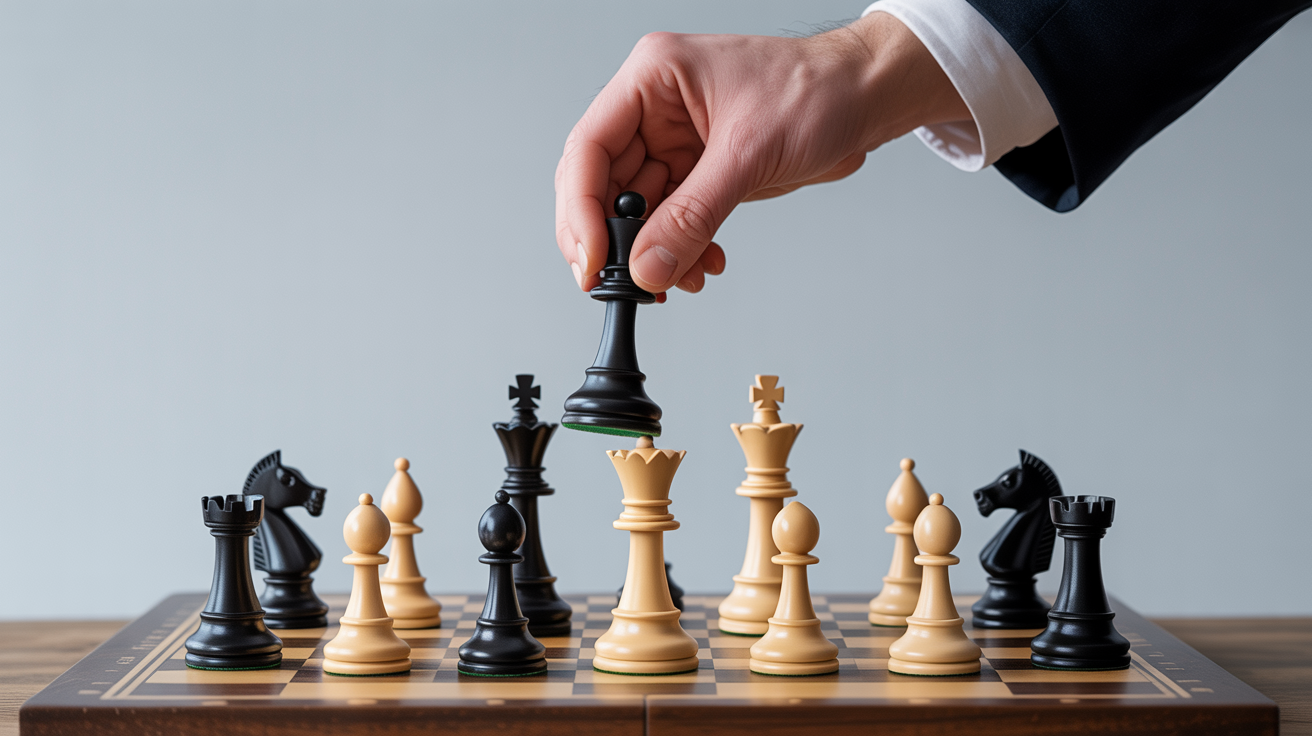
Hanging a piece means leaving it undefended where your opponent can capture it for free. It happens to every beginner, and it accounts for the majority of material loss at the club level. The good news: it is fixable. You do not need deep calculation ability. You need a consistent pre-move habit and some pattern recognition.
What "Hanging" Actually Means
A piece is hanging when it sits on a square with no defender, or fewer defenders than attackers. Either your opponent can take it for nothing, or they can trade an inferior piece for a superior one.
The two most common causes:
- Moving a piece and forgetting the one it was protecting
- Capturing a piece without checking whether the recapture loses material
Both come down to the same root problem: you looked at where you are going, not at what you left behind.
The One-Move Habit That Changes Everything
Before you touch any piece, ask one question: "What does my opponent's best reply look like?"
This is called the "Candidate Move Check" or, informally, the "look before you move" rule. Here is a practical three-step sequence to run on every move:
- Scan your opponent's threats first. Before considering your own plan, ask: does my opponent currently threaten anything? A check, a capture, a fork?
- Find your candidate moves. Pick two or three moves you are considering.
- For each candidate, ask: does this leave any of my pieces undefended? Visually trace every piece on the board, not just the one you are moving.
Step 3 is where most blunders get caught. Players focus on the destination square and forget to audit the pieces they are abandoning.
Pattern Recognition: The Situations Where Hangs Happen Most
Knowing the common scenarios helps you slow down at the right moments.
The Abandoned Guard
You move a piece that was protecting another piece, leaving the second piece hanging.
Example:
White bishop on c3 defends the pawn on e5.
White moves the bishop to f6.
The e5 pawn is now undefended -- Black takes it for free.
Before moving any piece, ask: "What was this piece protecting?"
The Recapture Trap
You capture an opponent's piece, but the recapture wins back more than you spent.
Example:
Black queen on d5, White pawn on e4.
White plays e4xd5 (pawn takes queen).
Looks like a queen win -- but was the d5 queen defended?
If Black had a rook on d8, Black plays Rd8xd5 and wins the pawn while the queen escapes.
Always count attackers and defenders before a capture.
The Open File Discovery
You advance a pawn or shift a piece, opening a line that puts a different piece in danger.
Example:
White rook on e1, White pawn on e4.
White advances pawn to e5.
If Black has a rook on e8, the e1 rook is now attacked along the e-file.
When you move pawns, mentally trace the lines they open.
The Fork Setup Hang
You create a fork with one piece, but your forking piece lands on an undefended square where it can be taken before you collect the fork.
Example:
White knight jumps to f7 to fork king and rook.
If Black has a queen covering f7, Black takes the knight before the fork pays off.
Check whether the square your attacker lands on is safe.
A Practical Pre-Move Checklist
Keep this list next to the board until it becomes automatic:
| Step | Question |
|---|---|
| 1 | Does my opponent threaten anything right now? |
| 2 | What piece am I moving, and what was it protecting? |
| 3 | Where is the piece going, and is that square safe? |
| 4 | After my move, does any of my other pieces become undefended? |
| 5 | If I am capturing, what recaptures? Do I still win material? |
Run through this before every single move. It takes about ten seconds. After a few hundred games, most of it becomes automatic.
Using Tactics Puzzles to Build the Habit
Solving puzzles trains the patterns your checklist is defending against. When you do puzzles specifically to stop blundering in chess, target two puzzle types:
Hanging piece spotters. Puzzles where the first move wins a hanging piece. These train your eye to see undefended pieces quickly, both for your opponent and for yourself.
Blunder-check puzzles. Some puzzle sites show a position and ask "what is wrong with this move?" These directly simulate the pre-move check.
A short daily session of 10 to 15 puzzles beats a long irregular grind. Consistency builds the recognition faster than volume.
For broader pattern work, chess tactics for beginners: the patterns that win games covers the tactical themes that appear most often in beginner games. Once you have the hanging-piece habit in place, learning those patterns is what converts the saved material into winning attacks.
Two patterns worth learning early because they cause hangs so often: the fork (one piece threatening two things at once) and the pin (a piece that cannot move without exposing something more valuable). Understanding these stops you from walking into them.
Frequently Asked Questions
How long does it take to stop hanging pieces regularly?
Most players see a noticeable drop in material blunders within four to six weeks of applying the pre-move checklist consistently. The habit has to become automatic, which takes repetition. If you run the checklist on every move in every game and supplement with daily puzzles, you will get there faster than players who only try to "think harder."
Should I use an engine to review my blunders?
Yes, but with a specific goal: find the move before the blunder. The blunder itself is obvious. The interesting question is, what did you miss on the previous move? Often you had a threat and ignored it, which meant your opponent had time to set up the capture. Engine review is most useful when you focus on the move before the mistake, not just the mistake itself.
My opponent hangs pieces too. Should I capture immediately or look first?
Always look first. Take two seconds to verify the piece is genuinely undefended and that capturing does not put your own piece in danger. This is called "checking the gift horse." Free pieces are usually free, but occasionally they are bait for a fork or a discovered attack.
Is hanging pieces the same as blundering?
Blundering is the broader term for any serious mistake. Hanging a piece is the most common type of blunder at the beginner level, but blunders also include walking into checkmate, missing a forced capture, or misplaying an endgame. Fixing the hanging-piece habit addresses the majority of beginner blunders.
Does the pre-move checklist slow my game down too much?
At first, yes, a little. But ten seconds per move over a forty-move game is less than seven minutes total, which is well within standard time controls. As the habit takes hold, the checklist runs faster because you only stop to think carefully when something looks off. Long-term, it speeds up your decision-making because you stop second-guessing moves you have already checked.