Improvement
Chess Time Controls Explained: Bullet, Blitz, Rapid, Classical
Learn what bullet, blitz, rapid, and classical time controls mean in chess, how each format plays out, and which one beginners should start with.
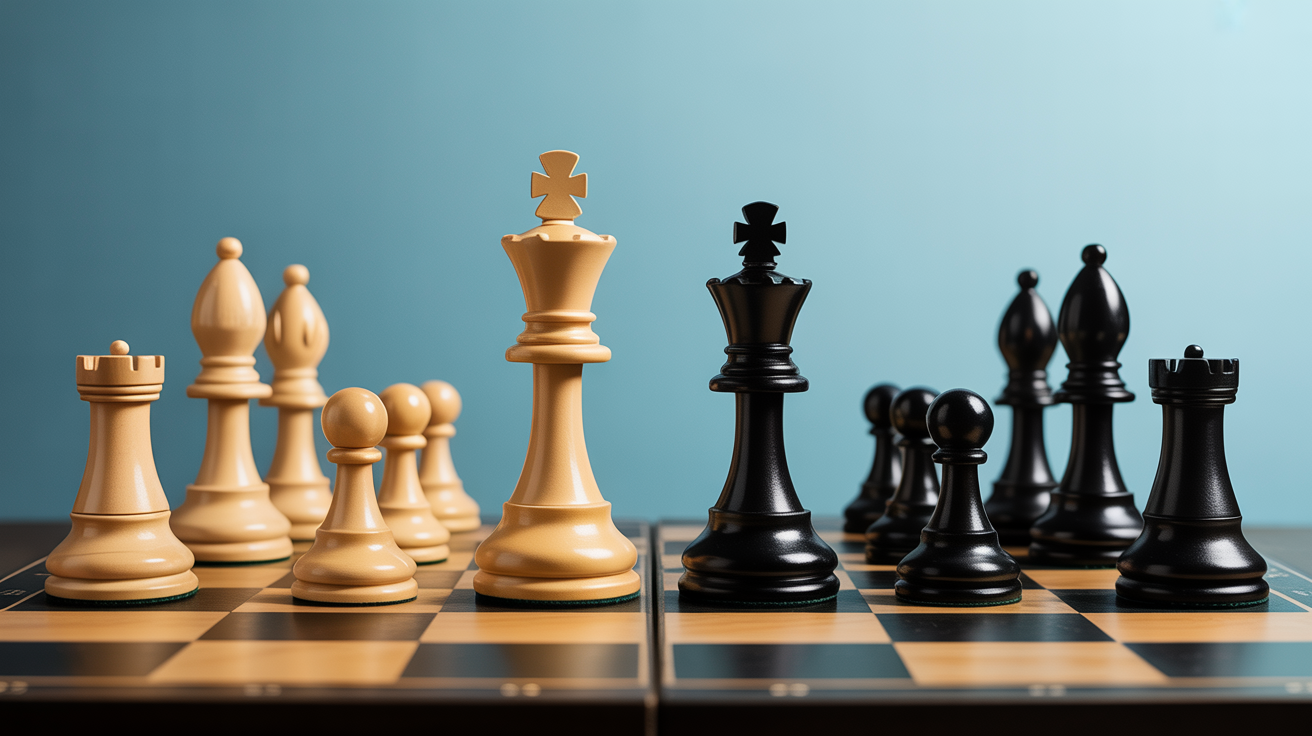
Every chess game has a clock, but not every clock runs at the same speed. When you join an online platform or walk into a club, you'll see games labeled "bullet," "blitz," "rapid," or "classical," and each one plays very differently. This guide breaks down what each format means, how it changes the way you think at the board, and where beginners should start.
At a glance:
- Bullet is under 3 minutes per player, blitz runs 3 to 10 minutes, rapid runs 10 to 60 minutes, and classical is anything over 60 minutes, following FIDE's official ranges.
- Increment (extra seconds added after each move) is standard on most online platforms and keeps games from being decided purely by flag-hunting.
- Rapid, roughly 15+10 to 25+10, is the best format for beginners building real chess judgment rather than reflexes.
- Your rating in bullet, blitz, and rapid will differ, often by hundreds of points, and that spread is normal rather than a sign something is wrong.
What Is a Time Control?
A time control is the rule that governs how much time each player has to make all their moves. If your clock runs out before the game ends, you lose on time, regardless of the position. Chess uses two main time-control systems:
Sudden death gives each player a fixed total of minutes. Once it's gone, it's gone.
Increment adds a few seconds back to your clock after every move, written as minutes+seconds (for example, 10+5 means ten minutes plus five seconds per move). Increment rewards faster play and prevents flag-hunting on a technically drawn or better position.
Most games you'll play online use increment. When you see a control listed as 5+3, you start with five minutes and gain three seconds per move.
The Four Main Formats
The table below shows the standard categories, their time ranges, and what they feel like in practice:
| Format | Clock time per player | Feel at the board |
|---|---|---|
| Bullet | Under 3 minutes (often 1+0 or 2+1) | Reflex-driven; pre-moves matter as much as moves |
| Blitz | 3-10 minutes (typically 3+2 or 5+0) | Fast but allows basic calculation |
| Rapid | 10-60 minutes (often 15+10 or 25+10) | Enough time to think one or two moves ahead |
| Classical | Over 60 minutes (90 min + 30 sec/move in FIDE) | Full calculation, preparation, and endgame technique |
These ranges follow FIDE's official definitions, so you'll see them used consistently across clubs, online platforms, and tournaments.
Bullet Chess
Bullet games run on clocks of three minutes or less per player. The most common formats are 1+0 (one minute, no increment) and 2+1 (two minutes plus one second per move).
At this speed, there is no time for deep calculation. Strong bullet players rely on pattern recognition built from thousands of slower games. Openings are played almost by memory, and tactical sequences happen on instinct.
Bullet is genuinely fun to watch at high levels, but for a beginner it largely becomes a test of mouse speed and blunder avoidance rather than chess thinking. You will not build sound habits playing bullet, because the clock punishes careful thought.
What Is Blitz Chess?
Blitz is the format most players spend the most time on. A game runs between three and ten minutes per player; 3+2 and 5+3 are the most popular online settings.
Blitz is fast enough to feel exciting and slow enough that you can calculate short sequences. You can usually calculate two or three candidate moves in a normal middlegame position, though in complex positions you'll often be forced to rely on intuition.
FIDE holds an official World Blitz Championship each year, and many top grandmasters consider blitz a serious discipline. For learning purposes, blitz is better than bullet but still rewards reactive play over deliberate thinking. Playing a sharp tactical sequence in blitz is satisfying; trying to calculate a seven-move combination and losing on time is the flip side.
Rapid Chess
Rapid time controls range from ten to sixty minutes, with 15+10 and 25+10 being popular online and club settings. FIDE uses 25+10 for its World Rapid Championship.
At rapid speed, you have time to look several moves ahead, cross-check your candidate moves, and apply what you've studied. Mistakes in rapid games usually come from faulty calculation rather than pure time pressure. This is where good chess habits take root.
Most over-the-board club play for beginners runs at rapid time controls, and this is where the gap between knowing something theoretically and executing it under the clock becomes clear.
Classical Chess
Classical games give each player more than sixty minutes and usually include increment to prevent late-game flag-hunting. Professional tournament play uses FIDE's main rate of 90 minutes for the first 40 moves, then 30 additional minutes for the rest of the game, plus 30 seconds per move from move one.
In a classical game, you have time to calculate long variations, weigh positional plans, and manage your clock strategically. Top players spend 20 to 45 minutes on a single critical decision. Endgames are played with precision rather than speed.
For most beginners, classical time controls feel slow at first. They also expose exactly where your knowledge runs out, which is why serious improvement work happens here.
Best Time Control for Beginners
The honest answer is rapid, specifically something in the 15+10 to 25+10 range.
Here is the logic: in bullet and fast blitz, the clock demands moves before your brain has processed the position. You train reflexes rather than chess judgment. When the same position arises in a slower game later, the habit you built under time pressure is rarely the right one.
In rapid, you have enough time to ask yourself a few questions before moving: Is my piece safe? Does my opponent have a tactic I'm missing? What am I trying to accomplish? These questions are the foundation of getting better at chess.
Blitz is fine as a supplement once you have some basics down. It is useful for racking up games in openings you're learning and for keeping sharp between study sessions. Just don't let it replace slower practice entirely.
How Time Controls Affect Your Improvement
The time control you play most shapes the habits you build. A few practical points:
- Study positions from your own rapid games. Blitz games move too fast to remember the critical moment; rapid games give you something to analyze afterward.
- Use tactics puzzles on unlimited time. Speed puzzle modes are popular, but solving puzzles carefully, the way you'd think in a real game, transfers better. Consistent tactics practice builds the pattern library that makes faster time controls manageable later.
- Learn to read the clock as part of your position. In classical and rapid, having much less time than your opponent is a real problem. Practice spending your time where it matters most, not on obvious moves.
If you want to track your progress across formats, most platforms keep separate ratings for bullet, blitz, and rapid. It is normal and expected to have different ratings in each format. A 1400 rapid player might be 1200 blitz and 1000 bullet. That spread reflects the skill overlap between formats, not a flaw in your chess.
Understanding algebraic notation helps in all formats, since annotated games, puzzles, and opening resources all use it. Getting comfortable reading moves like 1.e4 e5 2.Nf3 means you can learn from any source, not just videos.
Frequently Asked Questions
Is bullet chess real chess? It is chess, but it rewards a different skill set than slower formats. Fast pattern recognition and accurate pre-moving matter more than calculation. Most trainers recommend limiting bullet until you have a solid foundation in slower time controls.
Why do my bullet and rapid ratings differ so much? The formats test different abilities. Rapid rating measures chess thinking under moderate pressure; bullet rating measures pattern speed and reflex. They correlate loosely, but strong rapid players are often mediocre bullet players and vice versa.
What is the best time control for online club play?
15+10 is a practical choice. Games finish in under an hour, you have enough time to think, and the increment keeps the endgame from becoming a pure flag race.
Can I improve at chess by only playing blitz? Progress will be limited. Blitz gives you reps and keeps openings fresh, but the time pressure prevents the kind of careful analysis that builds real chess understanding. Mix in slower games and dedicated study time.
What does "increment" do in practice?
Each time you press your clock after making a move, the increment seconds are added to your remaining time. In a 10+5 game, if you have 3 minutes left and make a move in 2 seconds, your clock shows 3:03 after your move. This keeps the clock from hitting zero on very fast sequences and rewards players who move efficiently.
Sources
- FIDE Laws of Chess sets the official time-control definitions, including the appendices covering rapid and blitz play.
- Fast chess, Wikipedia breaks down bullet, blitz, and rapid ranges and their competitive history.
- Time control, Wikipedia explains how time controls work across board games generally, including increment and delay systems.