Improvement
The Best Way to Practice Chess Tactics With Puzzles
Learn how to practice chess tactics effectively with puzzles. A practical guide to tactics training that actually improves your game.
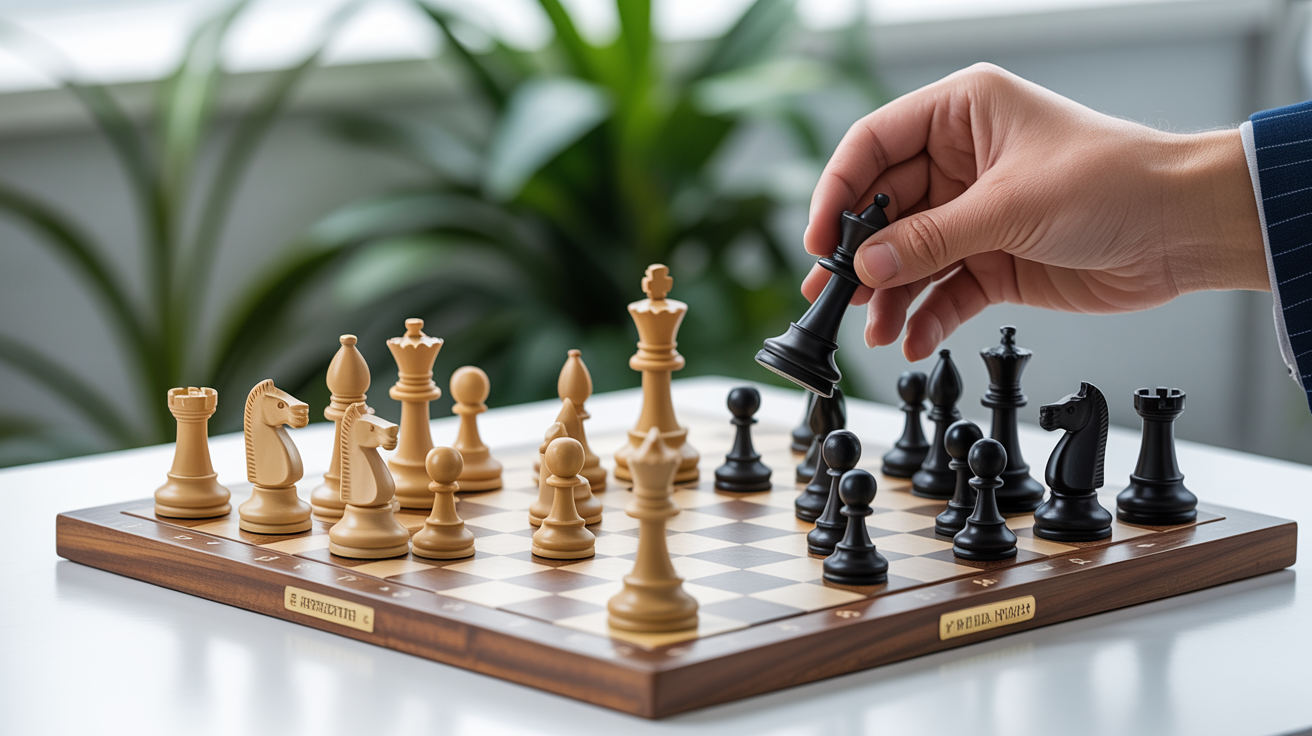
Solving chess puzzles is the fastest way to get better at the game, but only if you approach them correctly. Most beginners spend too little time on each puzzle, click through the solution when stuck, and move on without extracting the lesson. That habit builds pattern familiarity at best and false confidence at worst.
This guide explains how to use puzzles properly so that the patterns actually transfer to your games.
Why Puzzles Work (and When They Don't)
Tactics decide most games at the beginner and intermediate level. A single unnoticed fork, pin, or discovered attack can flip a game in one move. Puzzles train your eye to spot those moments because they repeat the same 10-15 core patterns across thousands of positions.
The problem is that the benefit comes from the searching, not the seeing. When you guess a move in 5 seconds and turn out to be right, you got lucky. When you spend 3 minutes considering alternatives and then find the correct move, your brain has worked through the pattern and is more likely to recall it over a real board.
Puzzles stop working when you treat them like a guessing game or use the hint button too early. The discomfort of being stuck is the training.
The Right Mindset Before You Start
Before looking at a single puzzle, know that you will fail many of them. That is normal. At a 1000-1200 rating level, a failure rate of 30-40% means you are working at the right difficulty. If you are solving everything in under 30 seconds, the puzzles are too easy. If you fail 8 out of 10, step down to easier material.
Two rules for every session:
- Commit before you look. Pick your move and say it out loud (or type it mentally) before you play it. This stops the "I'll just try this" habit.
- Review the ones you got right too. A correct answer from the wrong reasoning teaches nothing. If you found the move but cannot explain why it works, that pattern isn't in your memory yet.
A Simple Puzzle Routine That Works
You do not need two hours a day. Fifteen focused minutes beats sixty scattered ones.
Daily structure:
| Block | Duration | What to do |
|---|---|---|
| Solve | 10 min | Work through 5-10 puzzles. Spend at least 2 min on each. |
| Review | 5 min | Go back over missed puzzles. Find the moment you went wrong. |
| Spaced repeat | Optional | Revisit puzzles you failed 3 days ago to see if the pattern stuck. |
Most puzzle platforms (Chess.com, Lichess) handle spaced repetition automatically if you use their puzzle training mode rather than puzzle rush. Puzzle rush is fun, but it rewards speed over understanding. Save it for when you want a break from serious training.
How to Actually Analyze a Puzzle
When a new puzzle appears, do not move your cursor. Look at the full board first.
Step 1: Count material. Is one side ahead or behind? This tells you whether to look for a winning tactic or a defensive resource.
Step 2: Check for threats. Ask: "What is my opponent threatening on the next move?" A tactical shot often begins by answering or creating a threat.
Step 3: Look for loose pieces. An undefended piece is a target. If you see two or more undefended pieces, look for forks. If a piece is pinned, look for ways to pile on.
Step 4: Ask which pieces have the most potential. A queen on an open file aimed at the king's position is screaming to do something. A rook one file away from an open file might be one pawn trade away from becoming decisive.
Step 5: Calculate concretely. Once you see a candidate move, follow the sequence to the end. If your plan is 1.Nf6+ gxf6 2.Qxh7#, check each step: can Black avoid gxf6? Is Qxh7 actually checkmate with the king on h8?
This five-step process slows you down at first. After a few weeks it becomes automatic.
Organizing What You Learn
A pattern you see once does not stick. You need to see a fork 20-30 times in varied positions before your eye starts finding it without effort.
One useful habit: keep a simple note with the name of the tactic and a brief description of the position where you missed it. Something like:
- Back-rank weakness — Missed a Rd8+ because I didn't notice the king was stuck behind three pawns with no escape.
- Removing the defender — Played a safe move when Bxf7+ won the queen because it pulled the king away.
You do not need detailed diagrams. A one-line description is enough to jog your memory when you review later. If you want to understand notation before diving into puzzle records, the guide on how to read and write chess notation will make those notes much more useful.
Where to Find Good Puzzles
For beginners, free is fine. The two strongest sources are Lichess and Chess.com.
Lichess puzzles are completely free, unlimited, and sourced from real games. The site's puzzle rating system is reliable. Start at around 1000 if you are new and let it calibrate. The "Themes" filter lets you drill specific patterns: forks, pins, back-rank mates, and more.
Chess.com's puzzle trainer is also good, though some features require a membership. The free daily puzzle and the basic training tool are enough to get started.
One tactic worth mentioning: themed puzzle sets. Rather than solving random positions, spend a week doing nothing but fork puzzles. Then a week on pins. Narrowing the category helps the pattern click faster because you know roughly what you are looking for. Once you have drilled each theme separately, go back to random mode so your brain learns to identify the theme without being told.
The article on where to play chess online for free covers both platforms in more depth, including which features are free versus paid.
How Puzzles Connect to Real Games
The gap between puzzle success and over-the-board performance is real, and it frustrates a lot of beginners. You can solve 80% of your puzzles but still miss tactics in games. Here is why: in a game, you have to notice that a tactic exists. In a puzzle, you already know one is there.
To close that gap, add one habit to your game analysis. After each game you play, go through it and ask "was there a tactic I missed?" on every move where a piece was left undefended or a king was exposed. You do not need an engine for this at first. Just look. If you find a missed tactic, that is your puzzle for the day.
Over time, this connects your puzzle training to actual game patterns. The fork you drilled 30 times starts appearing in your games not because you calculated it from scratch, but because the shape of the position looks familiar.
A structured approach to this kind of improvement is spelled out in the beginner's chess improvement plan, which covers how to balance puzzles, game review, and opening study week by week.
FAQ
How many puzzles should I do per day?
Somewhere between 5 and 15 is a reasonable target for most beginners. Quality matters more than quantity. Five puzzles you genuinely analyzed and understood will do more for your game than 30 you clicked through in a rush.
What if I can't solve a puzzle after 5 minutes?
Give it a genuine try, then look at the solution and work backward. Why does that move win? Could you have seen the key piece relationship earlier? The lesson is in that gap between what you saw and what was there. Resist using hints until you have spent real time thinking.
Should I do timed puzzles (puzzle rush)?
Puzzle rush is entertaining and fine in moderation, but it should not be your main training tool. Timed pressure encourages pattern-matching over calculation, which can build bad habits early on. Once you can solve standard puzzles reliably and quickly on your own, timed modes become more useful for testing and fun.
What rating should my puzzles be?
A puzzle rating close to your own playing rating, or slightly above, is the right zone. If you play at around 800, start with puzzles rated 800-1000. Getting harder puzzles consistently wrong without understanding why does not teach the pattern.
Can I improve just by playing games without doing puzzles?
You will improve, but much more slowly. Playing games gives you experience with positions, but you see each tactic only once and rarely have time to analyze it properly during the game. Puzzles let you see the same pattern 20 times in a focused session, which is why dedicated tactics training is consistently the highest-return activity for developing players.