Rules & Basics
How a Chess Game Can End in a Draw: All the Draw Rules
Learn every chess draw rule: stalemate, threefold repetition, fifty-move rule, insufficient material, draw by agreement, and dead position.
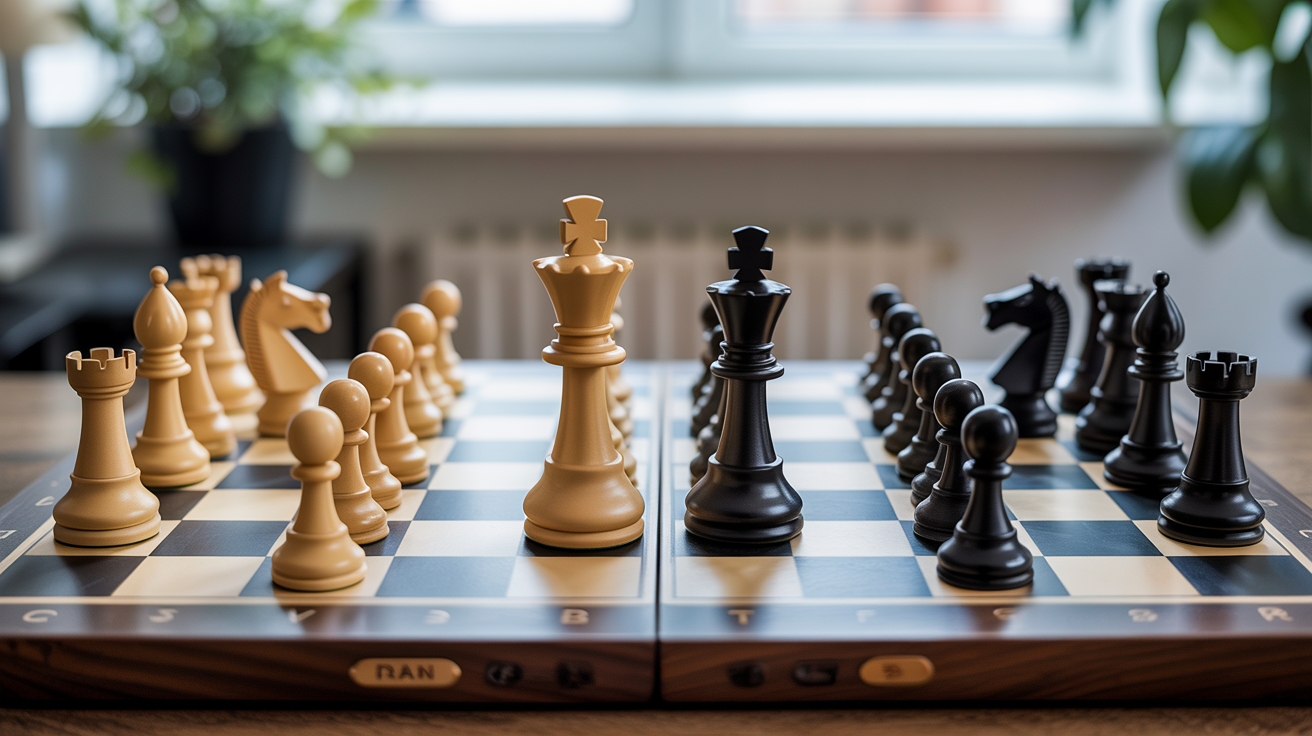
Not every chess game ends with a checkmate. A significant number of games, especially between evenly matched players, finish as draws. Knowing the draw rules matters from your very first games: you might be sitting on a winning position, only to accidentally stalemate your opponent and let a full point slip into half. Or you might be down material and need to know how to force a draw to save the game.
There are six ways a chess game can end in a draw. This guide covers all of them, with examples you can follow even as a beginner.
Quick answers:
- Stalemate, insufficient material, and dead position happen automatically the moment the position qualifies, no claim needed.
- Threefold repetition and the fifty-move rule are NOT automatic; a player has to stop the clock and claim them.
- Draw by agreement can happen at any point either player offers, and the other accepts.
- The single costliest beginner mistake is stalemating a winning position by accident, always check your opponent has a legal move before you play what looks like the final blow.
The Six Chess Draw Rules at a Glance
Before diving into each one, here is a quick reference:
| Draw Type | Who Triggers It | How |
|---|---|---|
| Stalemate | Happens automatically | Side to move has no legal moves, but is not in check |
| Insufficient material | Happens automatically | Neither side has enough pieces to force checkmate |
| Threefold repetition | Player must claim it | Same position appears three times with the same player to move |
| Fifty-move rule | Player must claim it | 50 consecutive moves with no capture and no pawn move |
| Dead position | Happens automatically | No sequence of legal moves can lead to checkmate |
| Draw by agreement | Both players agree | Either player offers; the other accepts |
Stalemate
Stalemate is the most important draw rule to learn early. It happens when the player whose turn it is has no legal moves and is not currently in check. The game ends immediately as a draw, even if one side has a massive material advantage.
Here is a classic stalemate position:
White king on h1, white queen on g6 (or a similar active square)
Black king on h3, no other black pieces

If it is Black's turn and the king cannot move to any square
without walking into check, that is stalemate.
Beginners lose points this way constantly. When you have a lone king against a stronger opponent, try to get your king into a corner where a careless move by your opponent might accidentally stalemate you. When you are the stronger side, always check that your opponent has at least one legal move before delivering what you think is the final blow.
Understanding piece movement is the foundation here. Review how the chess pieces move if you want to get sharper at spotting stalemate threats.
Insufficient Material
Some positions simply cannot produce a checkmate no matter what either player does. When that happens, the game is drawn automatically for insufficient material. The common cases are:
- King vs. King
- King and bishop vs. King
- King and knight vs. King
- King and bishop vs. King and bishop (both bishops on the same color)
A king and two knights against a lone king is theoretically drawn as well, because checkmate cannot be forced (though it is possible if the opponent blunders).
If you reach one of these endings, the game stops. There is no need to keep playing or to claim anything.
Threefold Repetition
If the exact same position occurs three times in a game, with the same player to move and the same legal moves available (including castling rights and en passant possibilities), the player whose turn it is can claim a draw. The position does not have to repeat three times in a row; it just has to appear three times at any point in the game.
This often comes up in endgames where one player chases the other's king around the board. It also appears in opening theory: some sharp lines are known to repeat and be drawn by this rule.
Important detail: the draw is not automatic. The player must stop the game and claim it. In over-the-board tournament play this is done before making a move; online platforms typically detect and enforce it automatically.
The Fifty-Move Rule
If fifty consecutive moves pass with no pawn move and no capture, either player can claim a draw. The count resets to zero any time a pawn advances or a piece is taken.
This rule exists to prevent a player from endlessly maneuvering in positions that cannot be won. Certain endgames, such as king, rook, and bishop against king and rook, are theoretically won but require more than fifty moves with perfect play. The fifty-move rule means that in practice those endings are usually drawn unless the defending side makes a mistake.
Like threefold repetition, the fifty-move draw is not automatic in over-the-board play. A player must claim it. Online chess software tracks it and often enforces it without a claim.
Dead Position
A dead position is one where checkmate is impossible regardless of what both sides do, even if they are trying to reach checkmate. This is distinct from insufficient material in that the pieces are still on the board but locked in a configuration that can produce no decisive result.
The most common example is when all pawns are fixed and neither side can make progress. The rules define it as an immediate draw when the referee or software recognizes it. In casual play, it comes up rarely and is often resolved by the players agreeing to a draw instead.
Draw by Agreement
Either player may offer a draw on their turn, typically right after making a move. The opponent can accept, in which case the game ends as a draw, or decline and play continues.
Draw offers are a normal part of competitive chess. Offering and accepting a draw is not a sign of weakness; it is recognizing that the position is balanced and continued play is unlikely to change the result. That said, beginners often offer draws too early, from positions they could still win. Get comfortable analyzing whether your position has real winning chances before offering.
You can read more about the full context of how games start and end in the complete rules guide for absolute beginners.
Practical Tips for Avoiding Accidental Draws
When you have the advantage, keep these points in mind:
- Before every move, check that your opponent has at least one legal response. If they have none and are not in check, you have stalemated them.
- When you have a queen and king against a lone king, use your king actively. Many beginners accidentally stalemate by pushing the lone king into a corner with no escape squares.
- Track pawn moves and captures mentally if you are in a long endgame. Approaching fifty moves without progress is a signal to change your plan or accept a draw.
- Set up the board correctly before the game starts. A proper starting position helps both players avoid confusion about piece placement and castling rights later. See how to set up a chess board the right way if you want a refresher.
Frequently Asked Questions
Can a player force a draw whenever they want?
Not quite. The only draw a player can force unilaterally is threefold repetition or the fifty-move rule, and only when the conditions have actually been met. A player cannot simply declare a draw because they are losing. The opponent must agree, or the position must meet one of the automatic draw conditions.
What happens if I do not claim threefold repetition and keep playing?
The draw opportunity passes for that move, but if the position repeats a third time again later, you can claim it then. The position just needs to appear three times total at any point in the game.
Is stalemate a mistake in the rules?
Many beginners assume stalemate should be a win for the stronger side, since the opponent has no moves. It is not, by rule. The distinction between stalemate and checkmate is that checkmate requires the king to be in check. Stalemate with no check is a draw, full stop. This has been part of chess rules for centuries.
Can the fifty-move rule clock reset during an endgame?
Yes. Any pawn move or capture resets the count back to zero. In some endgames, one side will sacrifice material just to reset the clock and avoid a draw claim, trading away a piece to get the count back to zero and continue playing.
Does draw by agreement require both players to agree at the same time?
One player offers the draw, and the other accepts or declines. It is not simultaneous. The offer stands until the opponent makes their next move; if they move without responding, the offer is considered declined. Online platforms usually present an explicit accept/decline button.
Sources
- FIDE Laws of Chess is the official rulebook defining all six draw conditions, including the exact wording for threefold repetition and the fifty-move rule.
- Draw (chess), Wikipedia surveys the history and statistics behind how often each type of draw occurs in practice.
- Stalemate, Wikipedia goes deeper into the rule beginners misjudge most often.